

The Day of Arafah:
Your Complete Guide
The Prophet ﷺ said: "There is no day on which Allah frees more people from the Fire than the day of Arafah." — Sahih Muslim, 1348
The 9th of Dhul Hijjah — the single most spiritually powerful day in the entire Islamic year.
Fasting on the day of Arafah erases sins of the past year and the coming year.
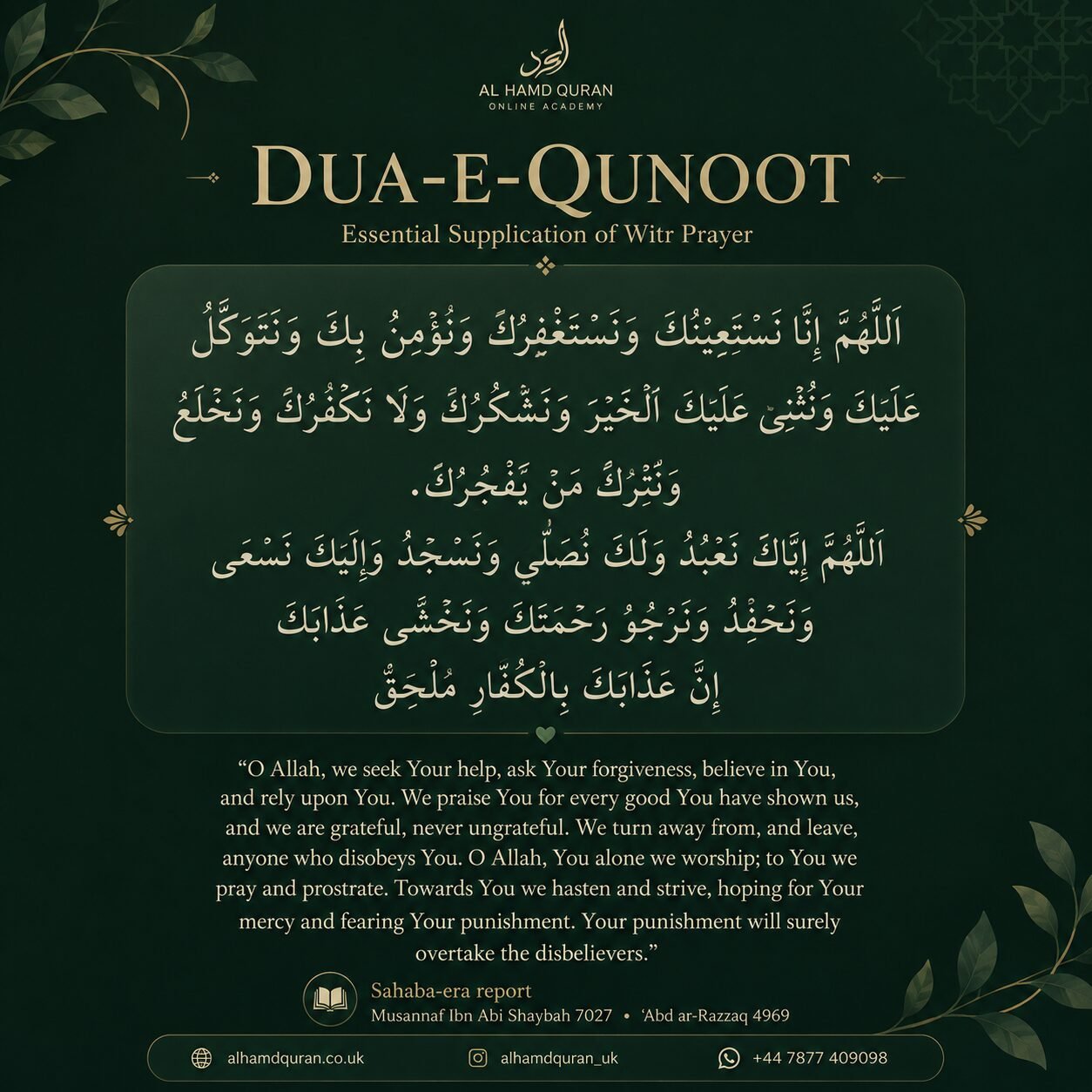
"La ilaha illa Allah wahdahu la sharika lahu, lahul-mulku walahul-hamdu, wa huwa ala kulli shay'in qadir."
Approximately 26th May 2026 — currently upon us during the blessed days of Dhul Hijjah.
What is the Day of Arafah?
The day of Arafah falls on the 9th of Dhul Hijjah — a day so significant that Allah Himself swore by it in the Quran. In Surah Al-Buruj, the scholars of Tafseer identify the "promised day" and the "witnessed day" as referring to this very occasion.
On this day, the pilgrims performing Hajj gather on the plain of Arafah — a vast stretch of land outside Makkah — standing before Allah in supplication from Dhuhr until sunset. The Prophet ﷺ declared: "Hajj is Arafah." Without standing on Arafah, Hajj is not complete.
For those not performing Hajj — which is the vast majority of Muslims worldwide — the day of Arafah is still one of the most sacred opportunities of the entire year. You do not need to be in Makkah to benefit from it. You need only the right intention, the right actions, and the knowledge of what this day holds.
- Allah completed the religion of Islam on this day: "This day I have perfected your religion for you..." (Quran 5:3)
- More people are freed from the Fire on this day than any other day of the year.
- Fasting it erases the sins of two full years — past and coming.
- The best supplication ever taught by the Prophet ﷺ was prescribed specifically for this day.
- Allah descends to the lowest heaven and boasts about those gathered on Arafah to the angels.
The Best Dua for the Day of Arafah
The Prophet ﷺ said: "The best supplication is the supplication on the day of Arafah." He then taught the Ummah the single most powerful dua to repeat throughout this blessed day — a declaration that encompasses tawheed, praise, and complete reliance upon Allah.
Recite This Throughout the Day
Repeat this dua throughout the day of Arafah — during your commute, between tasks, after every prayer, and especially in the last hour before Maghrib. The scholars advise that the final moments before sunset on Arafah, when pilgrims make their most fervent supplications, are among the most powerful windows of acceptance in the entire year.
Save this dua on your phone screen. Paste it to your fridge. Recite it quietly at your desk. The day of Arafah rewards those who are consistent — not those who are loud.
Fasting on the Day of Arafah: The Reward Explained
For Muslims who are not performing Hajj, fasting on the day of Arafah is among the most recommended voluntary acts in the entire Islamic year. The hadith is clear, direct, and authenticated.
Day of Arafah
Fast this day
Two Years of Sins Erased in One Day
Fasting on the day of Arafah expiates the sins of the previous year and the coming year. This is one of the greatest rewards attached to any single voluntary fast in all of Islam — available to every Muslim on earth, without requiring travel to Makkah.
Sahih Muslim, 1162 · Narrated by Abu Qatadah (RA)Who Should Fast and Who Is Excused
Not performing Hajj? Fasting is strongly recommended — it is Sunnah Muakkadah for those not on Hajj.
Performing Hajj? Do not fast. The Prophet ﷺ did not fast on Arafah during Hajj, as the pilgrims need physical strength for the standing (wuquf).
Ill or travelling? You are excused. Make dua and increase dhikr throughout the day instead.
Women during menses? Cannot fast, but can engage in all other forms of worship — dua, dhikr, Quran listening, and charity.
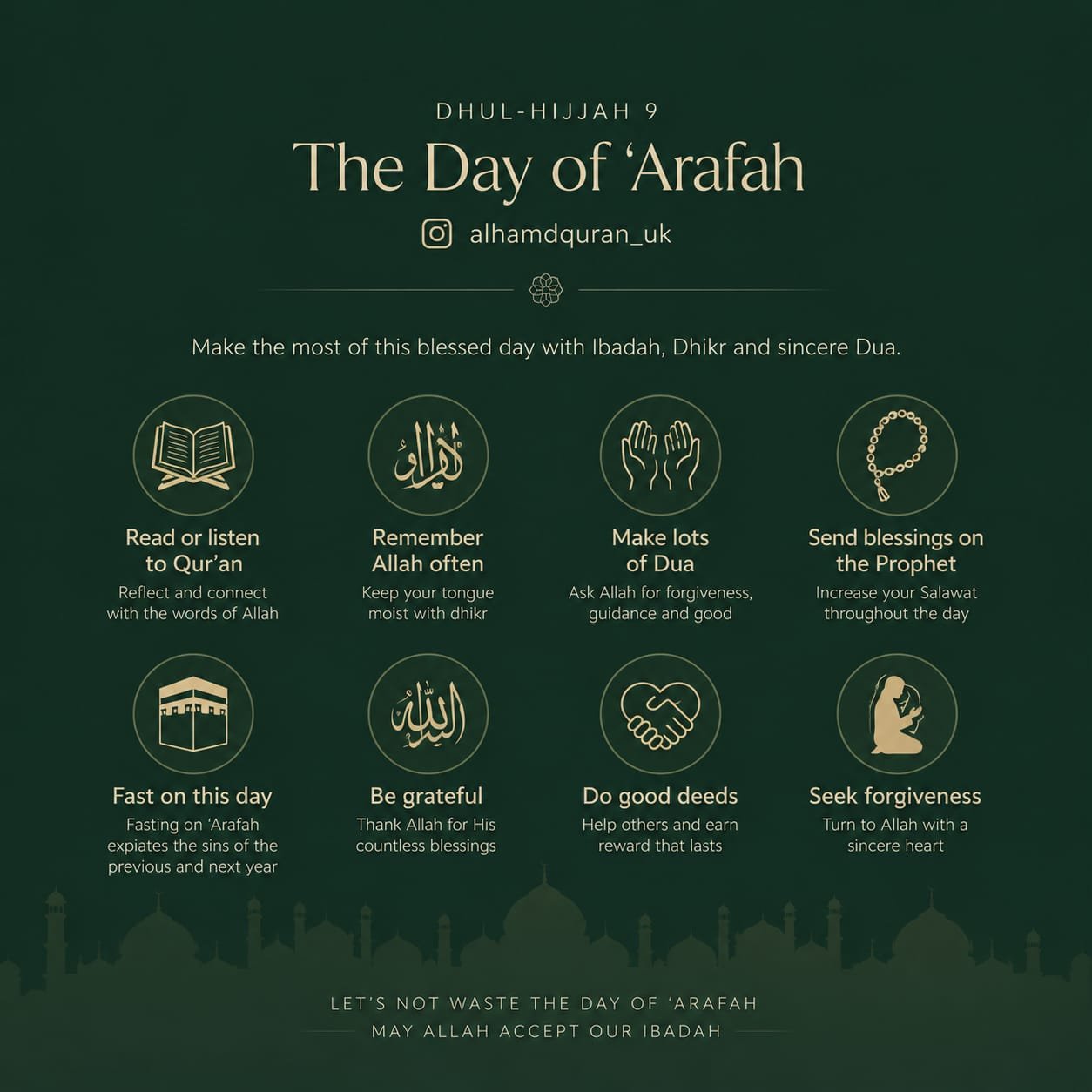
8 Acts of Worship to Perform on the Day of Arafah
Whether you are fasting or not, the day of Arafah is not meant to pass in ordinary routine. Every hour of this day carries spiritual weight that no other day in the calendar matches. Here are the eight acts to prioritise — drawn directly from the Sunnah of the Prophet ﷺ and the practice of the companions.
Read or Listen to the Quran
Reflect and connect with the words of Allah. Even one page with presence is more valuable than ten pages without attention.
Remember Allah Often
Keep your tongue moist with dhikr — Subhanallah, Alhamdulillah, Allahu Akbar, La ilaha illallah — throughout the day.
Make Abundant Dua
Ask Allah for forgiveness, healing, guidance, and goodness — for yourself, your family, and the entire Ummah.
Send Salawat on the Prophet
Increase your Salawat throughout the day. "Allahumma salli ala Muhammad" — every salutation returns ten blessings to you.
Fast on This Day
For those not on Hajj, fasting on Arafah expiates the sins of the previous and coming year — the greatest single-day fast in Islam.
Be Grateful
Thank Allah specifically and sincerely — for Islam, for health, for this opportunity. Gratitude on the greatest day carries immense weight.
Do Good Deeds
Help someone today. Give charity. Check on a neighbour. The good deed done on Arafah earns reward that lasts far beyond the day.
Seek Forgiveness
Turn to Allah with a sincere heart — name your regrets, ask for pardon, and resolve to leave what displeases Him. This is the day Allah most freely forgives.
Let's not waste the Day of Arafah — May Allah accept our Ibadah.
After the Day of Arafah: What Comes Next
The day of Arafah falls on the 9th of Dhul Hijjah. The 10th of Dhul Hijjah is Eid al-Adha — the culmination of the blessed ten days, marked by Qurbani (sacrifice) and congregational prayer.
But what many Muslims do not know is that the spiritual momentum of Dhul Hijjah does not simply end with Eid. It flows forward directly into the next sacred month on the Islamic calendar — Muharram, the first month of the Hijri New Year, which the Prophet ﷺ called "the Month of Allah."
- Muharram immediately follows Dhul Hijjah as the opening month of the new Hijri year.
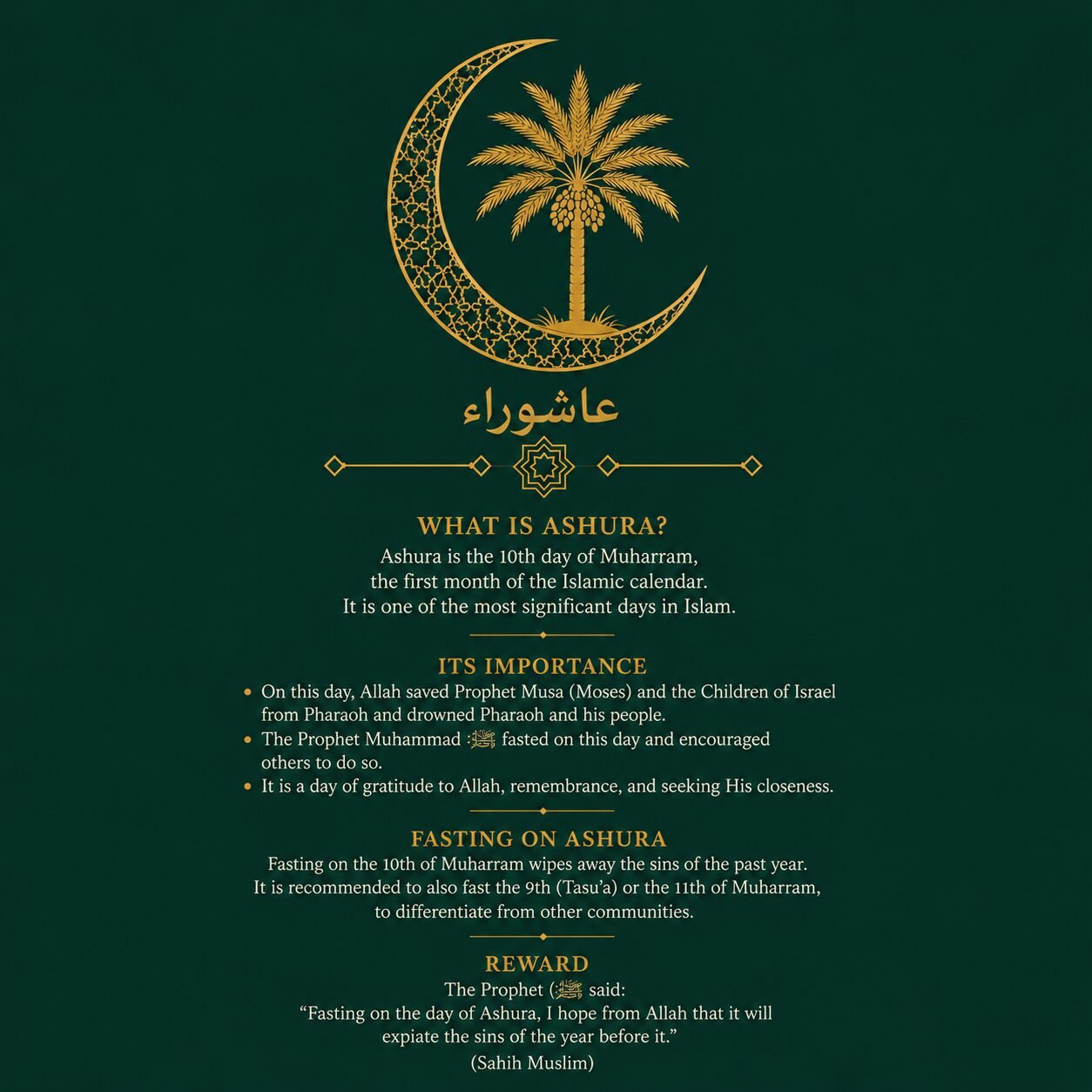
- The 10th of Muharram — Day of Ashura — carries a fasting reward that erases an entire previous year of sins.
- The Prophet ﷺ said voluntary fasting in Muharram is the best after Ramadan. (Sahih Muslim, 1163)
- The good habits built during Dhul Hijjah — daily Quran, charity, dhikr — should be carried directly into Muharram without interruption.
The best time to prepare for Muharram is now — while your heart is opened by the Day of Arafah. Whether you want your children to begin learning the Quran through the Noorani Qaida or you want to perfect your own recitation before the Hijri New Year arrives, these blessed days are the most powerful time to act.
The Greatest Day. The Greatest Opportunity.
The day of Arafah comes once a year. It does not wait. It does not repeat. And when it passes — the pilgrim who stood on that plain, the fasting Muslim who felt the hunger and offered it to Allah, the parent who recited the dua of Arafah with their child — they will carry something no worldly achievement can match.
Do not let this day be ordinary. Recite the dua. Make the fast. Fill the hours with dhikr, Quran, and sincere supplication. And when Eid al-Adha arrives the following morning, greet it knowing that you gave the day of Arafah everything you had.
Frequently Asked Questions
Structured for Google Featured Snippets, Perplexity and Gemini AI sourcing.
The Day of Arafah is the 9th of Dhul Hijjah, widely regarded as the greatest day in the Islamic calendar. On this day, Hajj pilgrims gather on the plain of Arafah in supplication, and Allah frees more servants from the Fire than on any other day. For non-pilgrims, fasting on the day of Arafah erases the sins of the past and coming year. The Prophet ﷺ also confirmed that Allah completed the religion of Islam on this day (Quran 5:3).
Fasting on the day of Arafah expiates the sins of the previous year and the coming year. This is confirmed in Sahih Muslim (1162), narrated by Abu Qatadah (RA). It applies to Muslims who are not performing Hajj. Pilgrims on Hajj do not fast on this day, as the Prophet ﷺ himself did not fast on Arafah during Hajj.
The Prophet ﷺ said: "The best supplication is the supplication on the day of Arafah." The most recommended dua is: "La ilaha illa Allah wahdahu la sharika lahu, lahul-mulku walahul-hamdu, wa huwa ala kulli shay'in qadir" — meaning: "None has the right to be worshipped except Allah alone, without partner. To Him belongs the dominion and all praise, and He has power over all things." Repeat this throughout the day, especially in the hours approaching Maghrib.
The Day of Arafah in 2026 falls on approximately 26th May 2026 — the 9th of Dhul Hijjah 1447 AH. This date is currently upon us as Dhul Hijjah is ongoing. Always confirm with your local mosque or Islamic authority as exact dates depend on moon sighting.
Yes — women who are menstruating cannot fast or perform Salah, but they can fully participate in all other forms of worship on the Day of Arafah. This includes reciting dhikr, making dua, giving charity, listening to Quran, sending Salawat upon the Prophet ﷺ, and performing acts of kindness. The spiritual opportunity of the day is not closed to them — only certain specific acts are temporarily restricted.
If you are not performing Hajj, the following are recommended for the Day of Arafah: Fast the day (the greatest single-day fast in Islam outside Ramadan); recite the dua of Arafah repeatedly; increase dhikr — Subhanallah, Alhamdulillah, Allahu Akbar, La ilaha illallah; make heartfelt dua for yourself, your family, and the Ummah; give charity; read or listen to Quran; and send abundant Salawat upon the Prophet ﷺ throughout the day.
START YOUR
SPIRITUAL JOURNEY
TODAY
There is no better time to build lifelong Islamic habits than during the sacred days of Dhul Hijjah and the approaching Hijri New Year. Whether you want your children to start reading the Quran from scratch — or you want to perfect your own Tajweed — the doors of knowledge are wide open.
Available 7 days a week · All ages and levels welcome · Male and female tutors · Flexible scheduling