

The 4 Sacred Months in Islam (Al-Ashhur Al-Hurum)
— Every Muslim Must Know:-
 Last Updated: 2026 Read Time: 12 minutes Topic: Sacred Islamic Months
- What are the 4 Sacred Months?
- Quranic & Hadith Evidence
- Why Did Allah Declare Them Sacred?
- Sins Are Heavier — Rewards Are Greater
- Best Deeds to Do in Sacred Months
- Virtues of Each Sacred Month
- Common Mistakes Muslims Make
- For Families & Childrens
- Conclusion
FAQs
What are the 4 Sacred Months in Islam?
The 4 Sacred Months in Islam (Al-Ashhur Al-Hurum)
— Every Muslim Must Know:-
 Last Updated: 2026
 Read Time: 12 minutes
 Topic: Sacred Islamic Months
 Table of Contents
- What are the 4 Sacred Months?
- Quranic & Hadith Evidence
- Why Did Allah Declare Them Sacred?
- Sins Are Heavier — Rewards Are Greater
- Best Deeds to Do in Sacred Months
- Virtues of Each Sacred Month
- Common Mistakes Muslims Make
- For Families & Childrens
- Conclusion
FAQs
 What are the 4 Sacred Months in Islam?
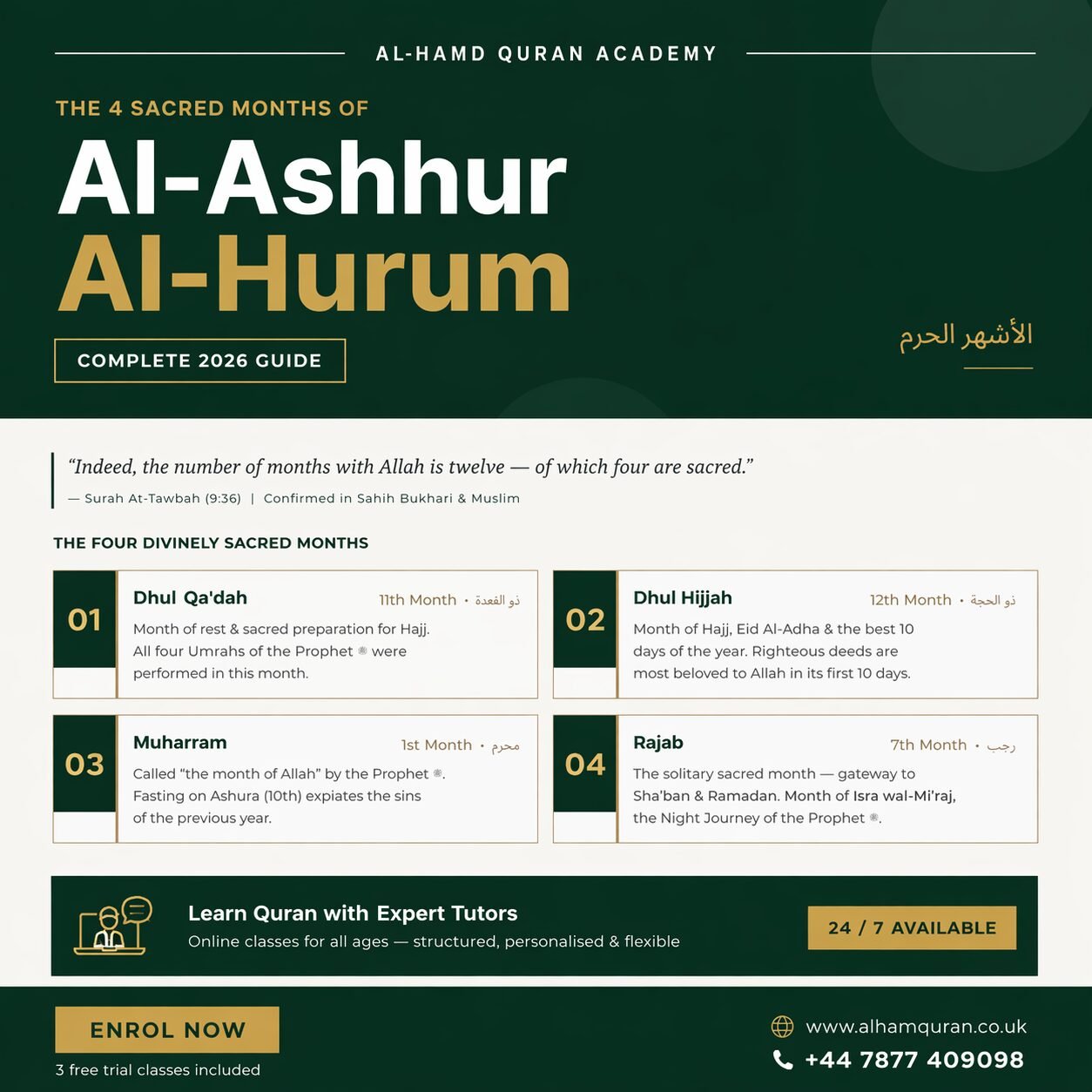
Al-Ashhur Al-Hurum (الأشهر الحرم) literally means "the forbidden/sacred months." These are four months of the Islamic Hijri calendar that Allah (SWT) chose and honoured above all others — declaring sin, conflict, and injustice especially forbidden within them.
The Prophet Muhammad ﷺ named all four in his Farewell Sermon, confirming their identities for the entire Ummah until the Day of Judgement.
Three of them — Dhul Qa'dah, Dhul Hijjah, and Muharram — fall consecutively, forming a sacred trio. The fourth, Rajab, stands alone — which is why the Prophet ﷺ called it "Rajab of Mudar," distinguishing it from the other three.
Quranic & Hadith Evidence
 Quranic & Hadith Evidence
"The year is twelve months, of which four are sacred: three consecutive months — Dhul Qa'dah, Dhul Hijjah and Muharram — and Rajab of Mudar, which comes between Jumaada and Sha'baan."— Sahih Al-Bukhari (3197) & Sahih Muslim (1679) — Farewell Sermon of the Prophet ﷺ
Why Did Allah Declare These Months Sacred?
The wisdom behind selecting these four months is deeply rooted in the greatest acts of Islamic worship and prophetic history:
| Sacred Month | Linked Ibadah / Significance | Key Event |
|---|---|---|
| Dhul Qa'dah | Preparation & travel for Hajj; Month of Umrah | Prophet ﷺ performed all Umrahs in this month |
| Dhul Hijjah | Hajj — 5th Pillar of Islam | Day of Arafah, Eid Al-Adha, Best 10 Days of Year |
| Muharram | Islamic New Year; Ashura fasting | Allah saved Prophet Musa ﷺ on Ashura |
| Rajab | Gateway to Sha'baan and Ramadan | Isra & Mi'raj — Night Journey of the Prophet ﷺ |
Scholarly Insight: Imam Ibn Rajab Al-Hanbali (رحمه الله) wrote that the sacred months are a mercy from Allah — a designated window for the soul to reset, renew its covenant with its Creator, and increase in righteousness before life moves on.
Sins Are Heavier — And Rewards Are Greater
 Sins Are Heavier — And Rewards Are Greater
This is one of the most important realities a Muslim must understand about Al-Ashhur Al-Hurum. The sanctity of these months works in both directions.
Allah says in Surah At-Tawbah (9:36): "…so do not wrong yourselves during them…" — the pronoun "them" refers specifically to these four sacred months, indicating that wrongdoing carries a uniquely heavier consequence.
Imam Al-Qurtubi (رحمه الله) explained: sins in the sacred months are more serious than in other months because of the sanctity of the time — just as sins in Makkah carry greater weight because of the sanctity of the place.


Best Deeds to Do in the Sacred Months (Action Plan)
 Best Deeds to Do in the Sacred Months (Action Plan)
- Zikr morning & evening
- Quran recitation daily
- 5 daily prayers on time
- Abundant Istighfar
- Fasting Mondays & Thursdays
- Ayyam al-Beed (13th–15th)
- Tahajjud — night prayer
- Jumu'ah Sunnahs
- Sincere Tawbah (repentance)
- Daily sadaqah habit
- Dua list — write & recite
- Deepen Islamic knowledge
Acts to Strictly Avoid
- Backbiting (gheebah), slander, and gossip
- Engaging in arguments, disputes, and spreading fitnah
- Any form of oppression or injustice against others
- Wasting sacred time in heedlessness and entertainment
- Postponing or neglecting obligatory acts of worship
Virtues of Each Sacred Month in Detail
 Virtues of Each Sacred Month in Detail
Dhul Qa'dah opens the sacred trio. Its name means "the month of rest" — historically the Arabs paused all warfare and travel conflicts, sitting in peace to prepare for Hajj. The Prophet ﷺ performed all four of his Umrahs in this very month, making it the most blessed time for Umrah.
Even for those not travelling to Makkah, it is a time to step back from worldly distractions, purify the heart, and prepare spiritually for the extraordinary month of Dhul Hijjah that follows.
Dhul Hijjah is arguably the most spiritually charged month in the entire Islamic calendar. It contains the best ten days of the year — the Prophet ﷺ said: "There are no days during which righteous deeds are more beloved to Allah than these ten days." (Bukhari)
It contains the Day of Arafah — fasting which expiates two years of sins — and the blessed Eid Al-Adha, commemorating the supreme sacrifice of Ibrahim ﷺ. Hajj — one of the five pillars of Islam — is performed in this month.
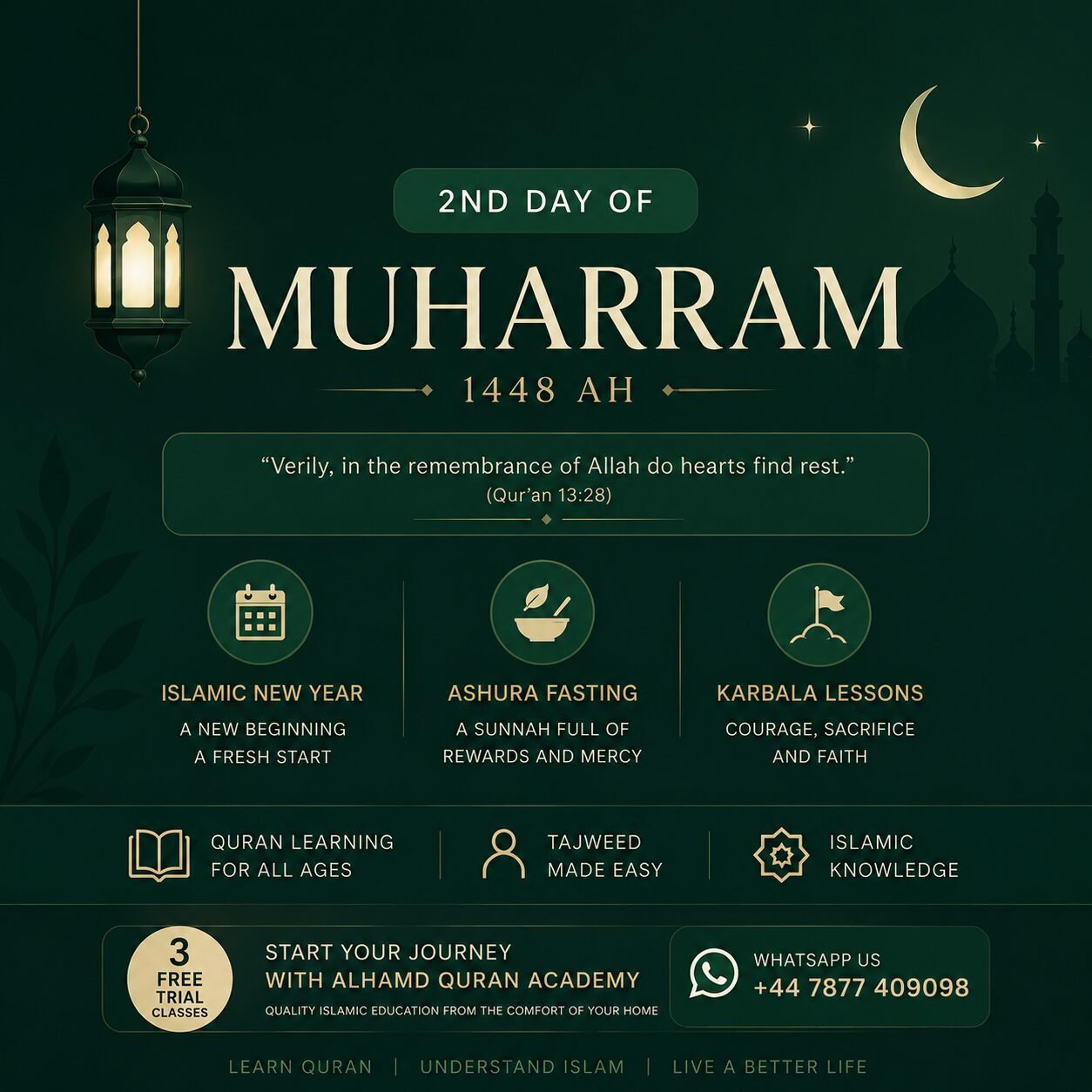
Muharram is called "the month of Allah" (Shahru Allah) by the Prophet ﷺ — the noblest title given to any month. It is the first month of the Islamic New Year and the month where fasting is most recommended after Ramadan.
Within it lies the Day of Ashura (10th Muharram) — fasting on this day expiates the sins of the previous year. The Prophet ﷺ also recommended fasting the 9th alongside the 10th to differ from previous nations.
Rajab stands alone between Jumaada Al-Akhirah and Sha'baan — a single sacred month surrounded by ordinary ones. Early scholars called it "Al-Ashamm" (the deaf month) — it neither hears nor allows the sound of war's weapons.
It was in Rajab that the Isra wa'l-Mi'raj (the Night Journey and Ascension of the Prophet ﷺ) took place — the most extraordinary journey ever made. It is the perfect time to renew one's connection with Allah before the coming of Sha'baan and then Ramadan.
Du'a of the Prophet ﷺ: "O Allah, bless us in Rajab and Sha'baan and allow us to reach Ramadan." — (Ahmad & Al-Bazzar)
Common Mistakes Muslims Make in Sacred Months
 Common Mistakes Muslims Make in Sacred Months
- Ignoring the sacred status and treating them like ordinary months
- Wasting precious time in entertainment and social media
- Continuing arguments, conflicts, and disputes with family
- Postponing worship and delaying tawbah
- Neglecting the increased reward of voluntary fasting and sadaqah
Sacred Months for Families & Children
 Sacred Months for Families & Children
 Teach the ChildrenExplain the four sacred months to children in simple, engaging terms — connect them to Islamic history.
 Family Zikr SessionsHold a short daily zikr circle after Maghrib — make it a consistent family habit.
 Share Hajj & Prophetic StoriesBring the months to life through stories of the Prophets ﷺ and the meaning of Hajj.
 Build Sadaqah HabitsKeep a family sadaqah box — even small daily amounts build powerful lifelong habits.
Conclusion
The four sacred months — Dhul Qa'dah, Dhul Hijjah, Muharram, and Rajab — are among the greatest gifts of time Allah has given the believers. Their sacredness is not a human tradition — it is a divine decree written in the register of Allah from the day He created the heavens and the earth.
Do not let these months pass in heedlessness. Guard your tongue. Increase your zikr. Fast voluntarily. Give in charity. And above all, turn to Allah with a sincere heart — for He is Al-Ghaffar (the Ever-Forgiving) and Al-Wadud (the Most Loving), always waiting for His servants to return.
May Allah allow us to witness all four sacred months and fill them with deeds that are heavy on the scale of good on the Day of Judgement. Ameen.
Frequently Asked Questions
 Frequently Asked Questions
 Join Alhamd Quran Academy
 Join Alhamd Quran Academy
Want to deepen your understanding of Islam, improve your Quran recitation, and learn Tajweed properly?
 Qualified Teachers One-to-One Sessions Flexible Timings Islamic Learning Environment
Start your journey today and build a strong connection with the Quran.
 3 Free Trial Classes — Register Now